
Menswear Guide: Finding a Signature Scent (Part One)
Welcome to our second menswear guide where we are going to take a look at what, for me, is one of my most important daily additions, fragrance. We got so carried away that we've had to split into two parts!
I’ve been meaning to look it up for a while to see if there is some kind of diagnosed propensity to smells that I must have, because certain scents can change my mood instantly.
I wear fragrance based on what I’m doing that day, the time of year, the places I’m going. As I write that, I realise it’s a bit OCD but here we are.
So I thought I’d delve a little deeper into my own thinking around scents but also introduce Edd, who is behind the fascinating Instagram account, LucidScents.
Long gone are the days when you’d wear what Santa left on Christmas day via whatever was on offer at Debenhams.
Edd: I’m better known online as LucidScents and I can be found primarily on Instagram, but in the past I’ve also created content on YouTube.

In fact, I was one of a small group of guys from the U.K. who originally started creating fragrance based content on YouTube and that was 13 Years ago now, way before TikTok and many other social platforms even existed.
I’ve also had a brief period of time working in retail, dealing with customers, trying to help them choose their next fragrance.
I’ve always been incredibly passionate about smell, scent, fragrance, and perfume, from a very early age. Our sense and ability to smell, while perhaps, not given as much credence by others, has always been of great importance to myself, even before I discovered the world of perfumery.
To this very day, there is so much to learn, discover, and to enjoy, about fragrance. The industry and the online fragrance community continues to grow at an exponential pace, globally (with no signs of slowing down). Being a part of both (along with working for a few small brands) over many years now, allows me to share my knowledge and experience with the wonderful Mallin & Son family, hopefully helping to demystify the world of fragrance.
There’s also a big thing there for me around evoking memories. Certain smells, be it in bottled scent or cooked food or smells from nature, they take me to good (and sometimes bad!) places.
E: One of my earliest scent memories, and perhaps my first encounter with perfume, was as a very young child, being wheeled around a branch of Boots, in a pushchair-somehow getting my small hands on a bottle of perfume, sniffing it, and upon doing so, two things immediately took place-firstly.
I was chided for handling a ‘dangerous’ object that ‘wasn’t for children’ and secondly, my tiny little mind was blown that this funnily shaped bottle had a smell to it that didn’t match the way it looked!
As if the contents of it was some kind of magical elixir! Being a typical ‘why’ child, I had to learn more, and ever since then, I haven’t stopped.
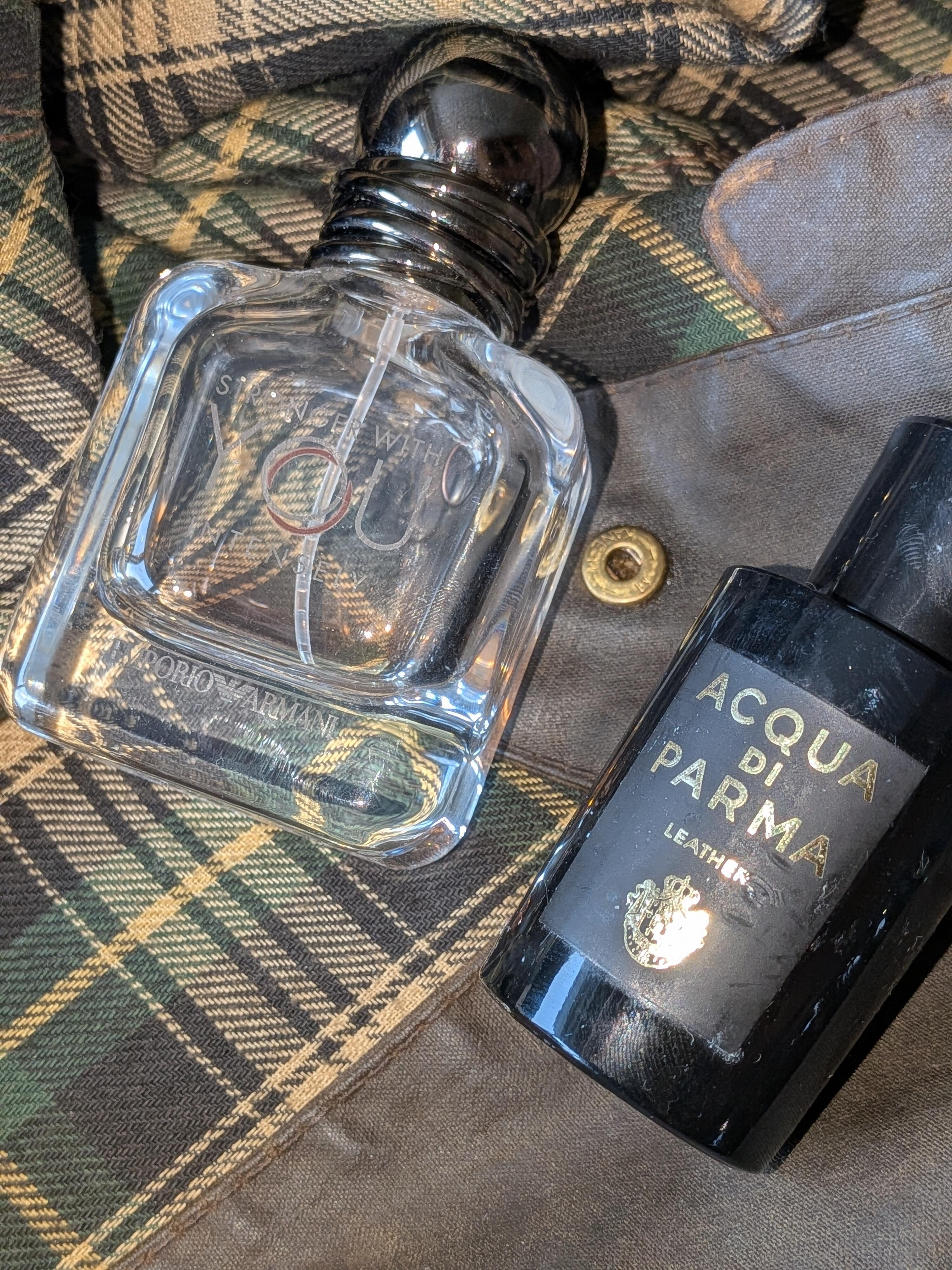
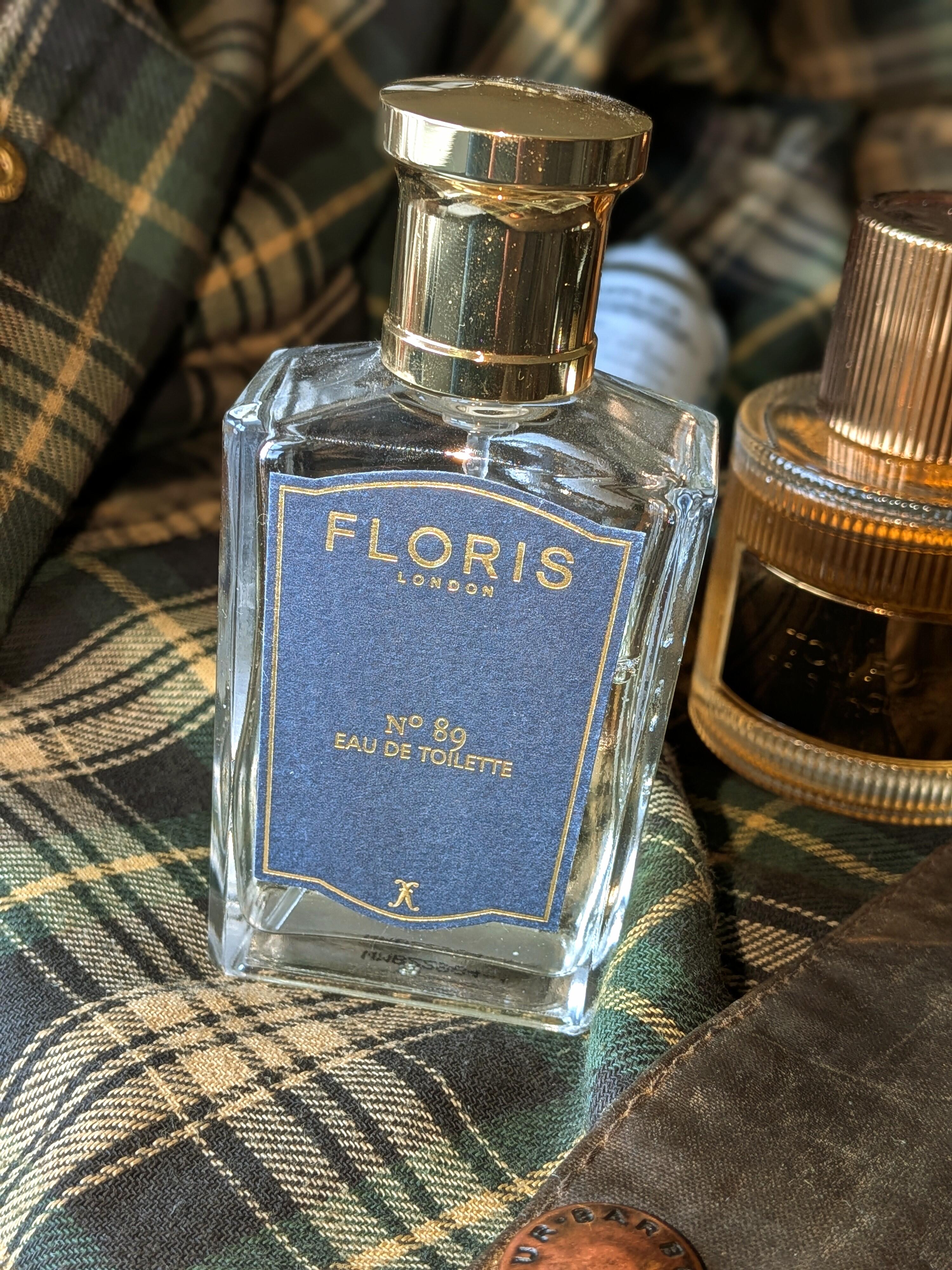
My own basic rule is to go lighter, fresher, more citrus over summer then bring in the woody, spiced scents for Autumn and Winter. Last summer, I had a love/hate relationship with Floris 89 which my stepdaughter killed off for me when she described it as smelling like/ her Grandma.
E: While there are no true ‘hard and fast rules’ in the world of fragrance, people often find that they might not care for a rich, heady fragrance in warm weather. But as the nights draw in and the temperature drops, they might reach for something with notes of vanilla, spice, leather, or tobacco.
Cool and cold conditions slow down evaporation rates of fragrance, so deeper, richer fragrances tend to work better.
The flip side to that is a fragrance which is citrus based, or fresh and aquatic, might not hit the spot in the winter, but work well in the summertime. Heat causes evaporation of fragrance to speed up, and notes can become intensified, thus lighter, fresher fragrances become more appealing in the warmer weather.
It’s also worth noting that there’s a geographical and cultural element to this as well. So what’s deemed heavy and dark, or light and fresh, in perfumery, can vary, depending upon where, and when, you are in the world.
But for me personally, temperatures and seasons are interlinked to mood, emotions, feelings, and occasions, that take place during periods in time.
All of that is reflected in my choice of perfume. For example, during the autumn and winter, I like richer, sweeter, darker, heavier fragrances. Perhaps indicative of falling leaves, Halloween, mulled wine, even bonfire smoke. While in the spring and summer, I tend to gravitate more towards greener, fresher, and fruity based fragrances. Those that maybe evoke thoughts of freshly cut grass, days at the beach, or time spent picking strawberries with friends.
So part of the idea behind having seasonal scents, is to reflect the sensorial world around you. Whether you want comfort from it, or maybe you want to fully embrace it.
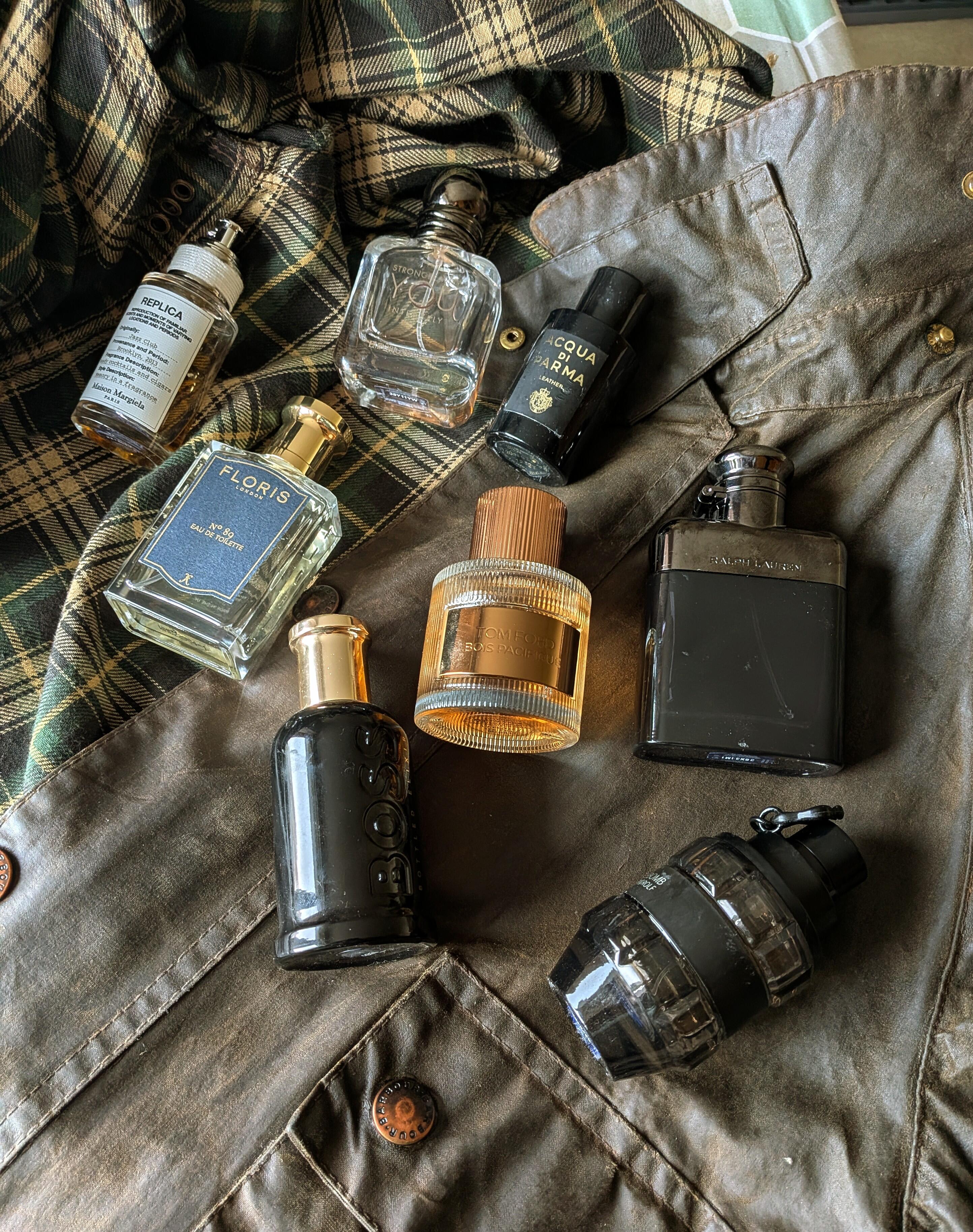
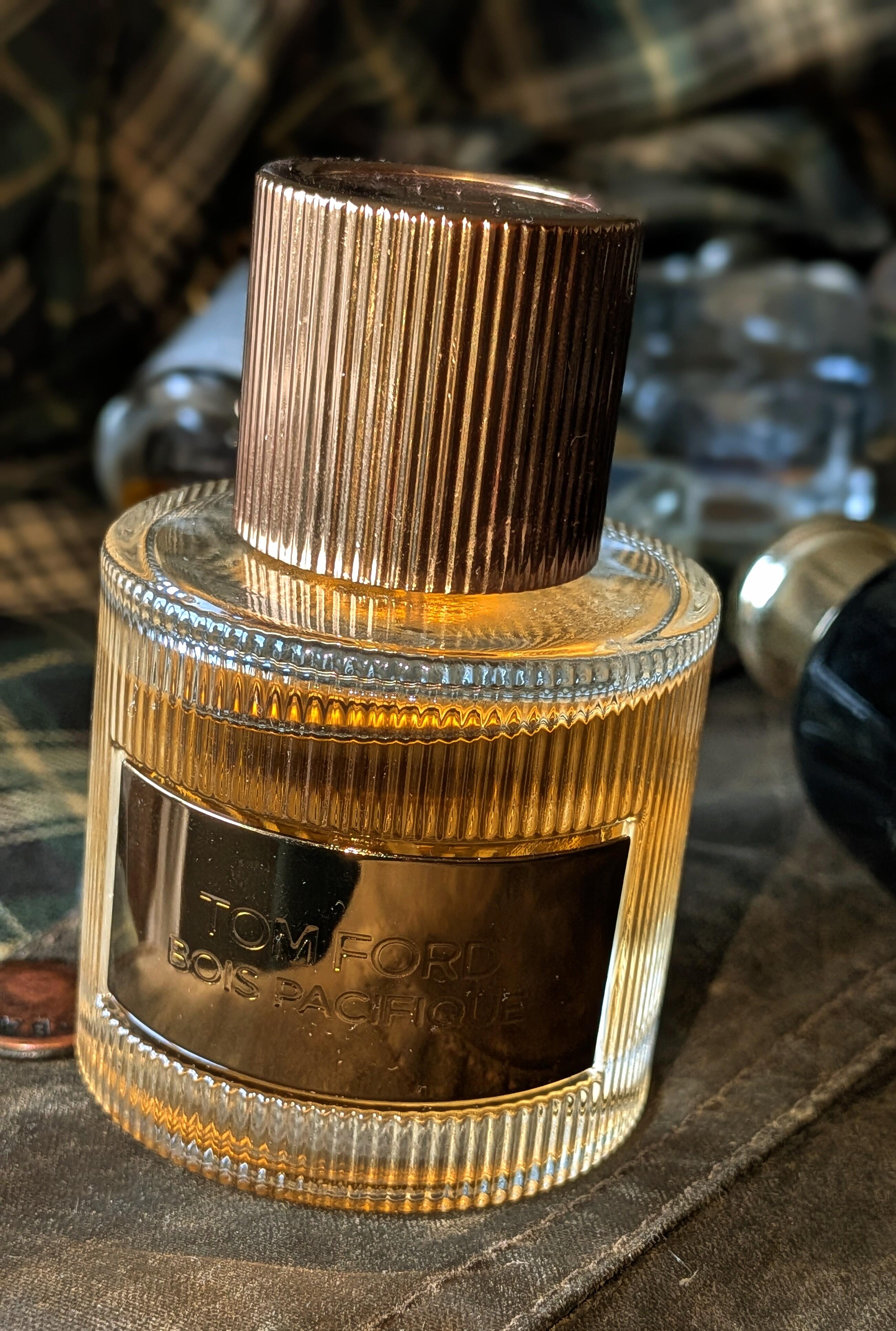
So there is absolutely no reason why, say for example, Tobacco Vanille, from Tom Ford’s private blend line (considered by many to be more appropriate for the autumn and winter), can’t be worn by someone in the spring or summer. Equally, Neroli Portofino, from the same brand (many feel this is a more spring and summer fragrance) can completely be worn, to great effect, in autumn and winter.
I spent far too long earlier this year trying to find one signature, all year-round scent and sticking to it. I am still on that journey and I think I’ve narrowed it down to Halfeti Leather and Ganymede which to my nose, are pretty similar. Again, I worry if they’re too seasonal?
E: (FYI, Ryan, both Halfeti leather and Ganymede are amazing fragrances for the autumn and winter, so kudos to you!)
But moving on from the concept of having seasonal scents, we face another important challenge, this time in the hunt for a signature scent-something that’s applicable all year round, in all occasions, in all temperatures, that’s undeniably you. The olfactory imprint those around you will recognise and associate you by.
There are undeniable benefits to having a single, signature fragrance in your life. It takes the guesswork out of having to select (potentially incorrectly) a gift for someone, you’ll quite possibly save money on buying an ever increasing arsenal of fragrances, and it’ll also simplify your life, freeing up your mind to focus on other tasks.
Some of the key points to remember when hunting for a signature fragrance, are to research different fragrance families e.g. floral, woody, fresh. To sample everything, and to also consider what you already like now, expand upon that, and to try everything you like on your skin, in your hair, and on fabric, too. Take your time, live with a fragrance for at least a week-samples and decants are great for this because it allows you enough time to fully understand, experience, and enjoy a fragrance. Let it become a part of you, before you part with your money, give yourself the luxury of time, as this is a decision not to be rushed.
On a personal note, I feel like there should be a certain amount of ‘exclusivity’ to your signature scent. It shouldn’t necessarily be the kind of thing you can buy just anywhere.
Off the top of my head, I think a good example of this is Ormonde Man, by the British niche brand, Ormonde Jayne. It was launched in 2014 and the perfumer responsible for it is Geza Schoen. It’s a beautiful, complex, characterful fragrance, with top notes of Cardamom, Pink Pepper, Juniper Berries, Bergamot and Coriander; middle notes are Black hemlock or Tsuga and Agarwood (Oud); base notes are Cedar, Sandalwood, Vetiver and Musk.
What I love the most about this is the fact that the fragrance is available in eau de parfum or Made to Measure Parfum, for which the customer selects the concentration. Giving a much more personal, almost bespoke feel to the scent. The brand gives you the option to tweak the fragrance ever so slightly, so you’ll end up with something truly unique and undoubtedly signature scent worthy.
The need to find a signature scent is to make my life (and the lives of family gifters) a little easier and streamlined much in the way that I only have the one wax jacket that does everything. But what if my taste changes?
I remember loving Spice Bomb a few years ago yet these days I’m almost indifferent to it, a shoulder shrug of a scent to my nose when it used to bring a smile. Do our preferences change through maturity or is it boredom?
E: Well, the short answer is yes, to both, and those are definitely two factors in the long term love and appreciation of scent.
As human beings, over time, we’re always growing, moving forward, travelling, meeting new people, constructing and refining our identities, experiencing new things, etc.
We naturally, as individuals, mature. Our inner landscape, our tastes, sensibilities, and noses, are shaped by this. In turn, that affects our taste and relationship with fragrance.
Being exposed to new fragrances, over time, can pique our olfactory interest, drive us to seek more, to curate a collection and construct a fragrance wardrobe (although it’s worth reiterating that it’s perfectly fine to simply have one signature scent-remember, there are no hard and fast rules when it comes to fragrances).
But from the point of view of the consumer, with so many new fragrances being released year after year, it can be hard to keep up with things. And with so many brands releasing a lot of commercial scents that smell increasingly similar to each other, boredom can easily set in.
Another cultural phenomenon that is worth touching upon, is that because social media is now interwoven into the fabric of everyday life, and we’re all part of the attention economy, with rapidly shrinking attention spans, designed to maximise engagement which is now becoming mirrored in fragrance composition.
You’ll find a lot of brands putting a large amount of their budget into expensive materials for the opening of the fragrance-giving you an initial’ ‘rush’ with little thought for the rest of the composition.
So unfortunately we’re seeing more and more fragrances that smell the same, that don’t really hold much craft, beauty, or intrigue, that are rapidly becoming disposable commodities, as opposed to something with worth, meaning, value, and longevity-all of which adds up to consumer boredom.
There’s a rather large echoing here to what’s happening in the fashion industry and sadly it touches most industries these days.
I always look for the parfum as I am led to believe that it is formulated stronger so it lasts longer with fewer sprays. Is this correct?
E: So I think a lot of guys out there are slightly confused, and a little bit intimidated when it comes to deciphering fragrance concentrations; what does it mean if something’s an edt or a Parfum? On almost every bottle of perfume you’ll handle, you’ll see the brand name, the name of the fragrance (sometimes the name of the perfumer), and the concentration type.
In order to try and keep things simple, I’ll break them down, like this:
Attar (a Middle East/Mediterranean ancient style which is slowly gaining interest)-100% Concentration of perfume oils
Extrait de parfum- Concentration of perfume oils 30-50%
Parfum – Concentration of perfume oils – 20-30%
Eau de Parfum – Concentration of perfume oils – 10-15%
Eau de Toilette – Concentration of perfume oils – 5-8%
Eau de Cologne – Concentration of perfume oils – 2-5%
Eau Fraîche – Concentration of perfume oils – 1-3%
The higher the concentration means the fragrance contains a greater amount of perfume oils and less alcohol. You have the potential for a deeper, richer scent and more intense olfactory impression-but it’s usually more expensive.
There’s a lot of different factors that come into play, when trying to accurately calculate just how long each type will last on each individual person. It’s worth bearing in mind that fragrance concentration type doesn’t always denote the fragrance strength (and longevity). That’s more to do with the type and amount of certain raw materials, molecules, and aroma chemicals that the perfumer chooses to use in the composition.
If there’s a fragrance you like that comes in various different concentration types, it’s worth trying them out for yourself to see which is more your style.
We thank Edd for taking the time to share such a depth of knowledge and to at least entertain my own personal addiction/musings and look forward to sharing part 2 which includes some amazing recommendations.
Has this opened your eyes to a new world you didn’t know existed and you’re now ready to throw away that can of Lynx Africa? Or are you thoroughly down the line of owning your signature scent.
Let us know on Instagram or at contact@mallinandson.com
Thanks for reading!